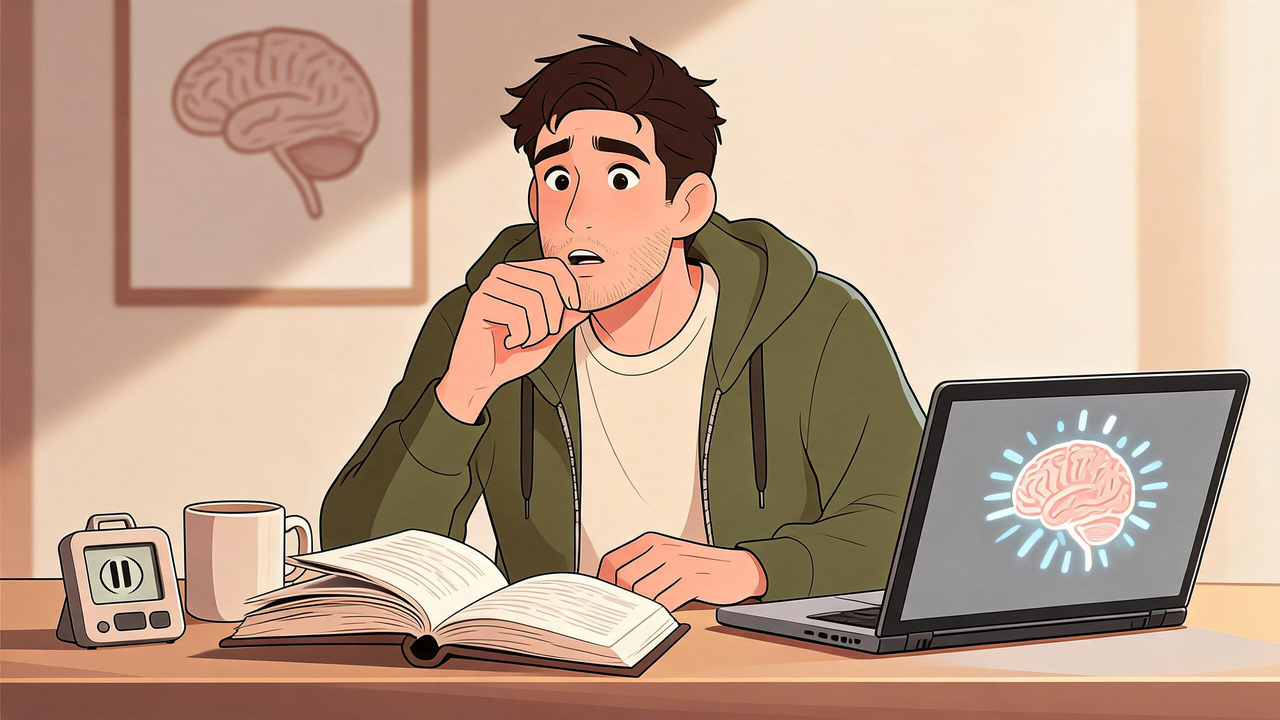
Why Do We Get Bored? The Science of Boredom
Unpacking why our brains sometimes just say 'enough'.

Boredom isn't just a lack of things to do. It's your brain's way of saying it needs more—more stimulation, more challenge, or more meaning. When we feel bored, it's because the current environment doesn't satisfy our need for engagement.
What Exactly Is Boredom?
Picture this: You're stuck in traffic, radio playing the same songs, nothing but brake lights ahead. Your mind starts to wander. That's boredom in action. It's not the absence of activity; it's the absence of engagement. Boredom is what you feel when the world around you is not interesting enough to hold your attention.
Why Does This Happen?
Our brains crave stimulation, much like our bodies crave food. When the level of stimulation dips below our personal threshold, boredom sets in. Imagine your brain as a curious detective, always looking for clues or puzzles to solve. Without that, it starts to tap its mental fingers, itching for something to do.
Is Boredom Actually Harmful?
Not really. While boredom can feel uncomfortable, it's a useful signal. It tells us we're not fulfilled by our current situation. Some researchers suggest that boredom can be a catalyst for creativity. Ever notice how your best ideas come when you're daydreaming in the shower? That's boredom nudging you to explore.
Can We Use Boredom to Our Advantage?
Absolutely. Think of boredom as a springboard for self-discovery. When you're bored, you're given a chance to reflect on what truly interests you. Instead of diving into the endless scroll of social media, try exploring a new hobby or reading about something unfamiliar. You might find something that sparks a new passion.
How Can We Manage Boredom?
First, recognize it for what it is—a nudge from your brain. Next, try varying your activities. If a task feels monotonous, add a challenge or twist to it. Sometimes, simple techniques like setting goals or breaking tasks into smaller parts can rekindle interest. And if those don't work, maybe it's time to find something completely different to do.
Boredom, while often seen as an enemy of productivity, is actually a helpful companion nudging us towards more fulfilling activities. When we lean into it, rather than shy away, we might discover new interests and paths that we hadn't considered before.
What did we learn?
- →Boredom occurs when our brains seek more stimulation than the current environment provides.
- →It's not just a lack of things to do—boredom is about a lack of satisfying engagement.
- →Being bored can push us to explore, create, or find new interests that fulfill us.
- →Understanding boredom can help us use it as a tool for self-discovery and growth.
Sources & further reading
- 1.John Eastwood — prominent researcher on the psychology of boredom
- 2.Sandi Mann, 'The Upside of Downtime' — a book exploring the benefits of boredom
- 3.James Danckert, 'Out of My Skull' — a book on the neuroscience of boredom
Get one fascinating idea every week.
No spam. Just things worth knowing.