How QR Codes Work: The Genius Behind Those Squiggly Squares
Inside every QR code is a hidden structure that keeps them working even when damaged.
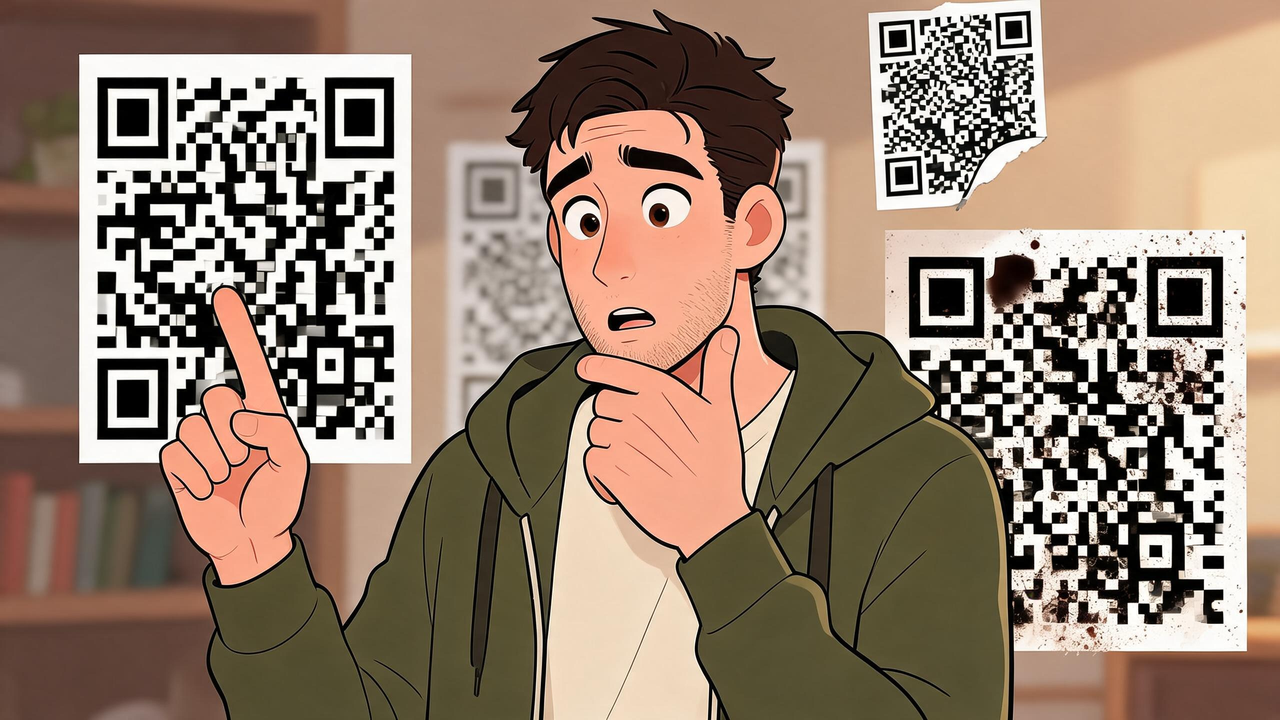
QR codes are remarkably resilient. Even if they get smudged or torn, they can still convey the information they hold. This seemingly magical ability comes down to smart design and some clever error-correction techniques.
What are those squares in the corners?
The next time you look at a QR code, start by noticing the three big squares in the corners. These are called finder patterns. They help your phone or scanner quickly orient itself and understand how the rest of the grid is laid out. By identifying these squares, the scanner can figure out the correct alignment and start reading from the right spot.
Imagine them as the anchors that help a ship stay steady even in choppy waters. The ship is your QR code, and the water is all the potential distortions or misalignments that could make scanning harder.
How is data hidden in those patterns?
Now, look beyond the big squares. The rest of the QR code is a grid filled with countless tiny squares. Each one represents a bit of data. These are arranged in a way that might look chaotic at first glance but actually follows a strict order.
The black and white squares map out data in binary, just like how a computer might understand it. Computers don’t see randomness; they see a precise layout. This is what allows them to decode complex information quickly.
Think of this grid like pixels on a screen. Each dot has a specific place and value, coming together to create a larger picture — or in this case, a chunk of data.
Why can QR codes still work when damaged?
Here's where the real magic happens. QR codes use something called Reed-Solomon error correction. This mathematical method allows a code to keep working even if up to 30% of it is damaged or obscured. Essentially, QR codes carry extra pieces of data that act like puzzle pieces. If some bits are missing, these pieces fill in the gaps.
Picture it like a jigsaw puzzle where you somehow know what the missing pieces look like. Even with a few pieces gone, you can still see the full image. Reed-Solomon codes enable this by embedding additional data that helps reconstruct missing parts.
Why do QR codes look so complex?
To us, QR codes look pretty complex, but that's by design — they’re meant for machines, not humans. The intricate pattern optimizes how much data each code can store and communicate.
Consider a library with a meticulous catalog system. To a new visitor, it might seem confusing, but it allows librarians to find any book swiftly. Similarly, QR codes are designed with scanners in mind, streamlining the reading process even when the pattern seems overwhelming.
How do QR codes keep evolving?
Despite being over two decades old, QR codes continue to evolve. Innovations are making them even more capable, expanding what they can do beyond just linking to a website. They’re now used in everything from payment systems to tracking shipments.
This adaptability makes QR codes a fascinating case of technology blending simplicity with complexity, creating a tool that’s both robust and versatile.
So the next time you scan a QR code, take a moment to appreciate the clever engineering behind those black and white blocks. It’s a testament to how thoughtful design can make everyday technology extraordinarily reliable and surprisingly adaptable. Want to see one built from scratch? Make your own with our free QR code generator and try setting the error-correction level to watch the pattern grow denser.
What did we learn?
- →QR codes contain finder squares that help scanners orient and locate the data quickly.
- →The pattern inside a QR code isn't random; it's a clever grid of data that computers can read.
- →Reed-Solomon error correction allows up to 30% of a QR code to be damaged without losing data, thanks to built-in redundancy.
- →QR codes are designed to communicate with machines, not humans, which is why their patterns can seem so confusing.
Sources & further reading
- 1.Reed-Solomon codes — an error-correction method developed by mathematicians Irving S. Reed and Gustave Solomon
- 2.Denso Wave — the company that invented the QR code in 1994
Get one fascinating idea every week.
No spam. Just things worth knowing.